Refurbishment and Conversion of Historic Cornish Mill
Menadue Mill, Trewarmett, Cornwall, UK
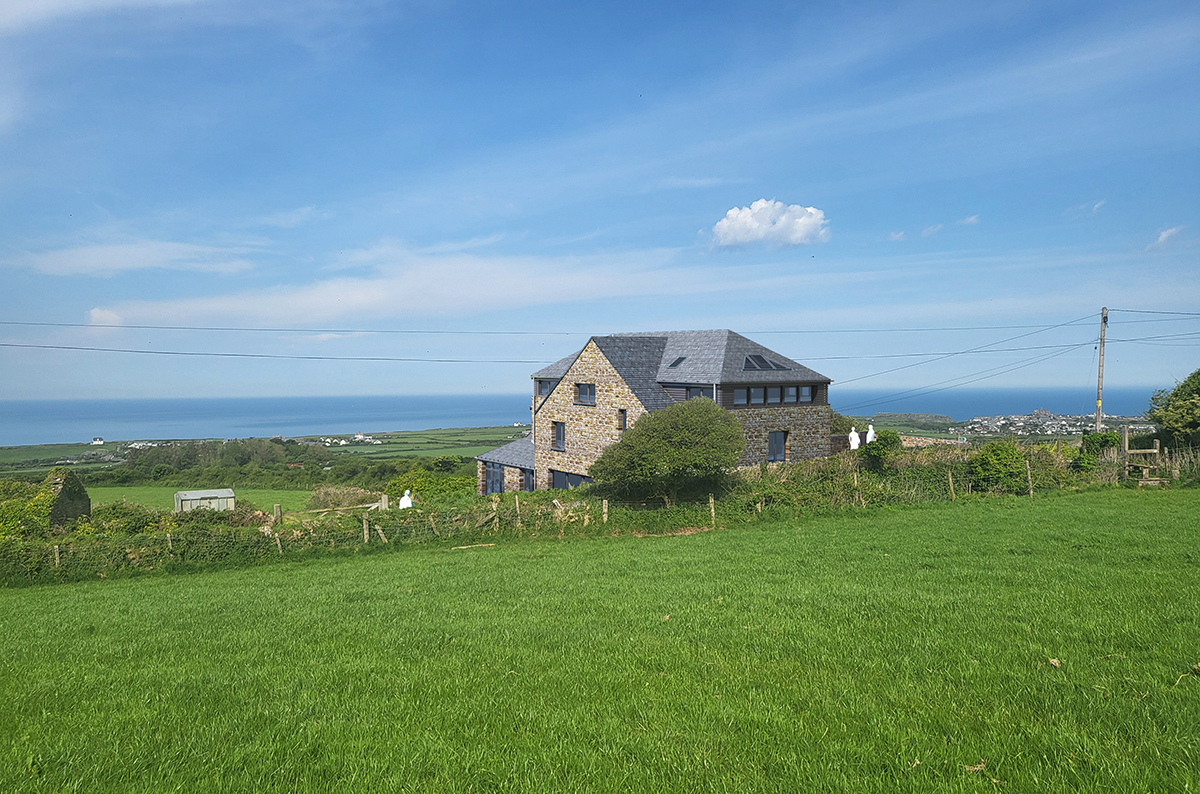
Menadue Mill sits dramatically above the Atlantic cliffs near Trewarmett on the North Cornwall coast, within the Cornwall National Landscape (formerly Area of Outstanding Natural Beauty). Originally an agricultural mill with a water-wheel which was converted into holiday ho some time ago, the building project involves the sensitive refurbishment, extension, and long-term adaptation of this historic structure to create a high-quality family home, while conserving its heritage significance and landscape setting.
Planning Approval and Design Evolution
Full planning permission has been secured for the first phase of works following extensive dialogue with Cornwall Council, National Landscape officers, and specialist consultants. Our approved scheme addresses heritage, ecology, landscape impact, flood risk, and access constraints on this steeply sloping and environmentally sensitive site.
Building on this consent, the project has evolved to include an expanded second phase, including a discreet garage, wellness and gym spaces, improved access and parking arrangements, and enhanced ancillary accommodation. These elements are designed to remain visually recessive, subservient to the mill, and fully aligned with the principles established under the approved scheme.
Integrating Heritage, Landscape and Ecology
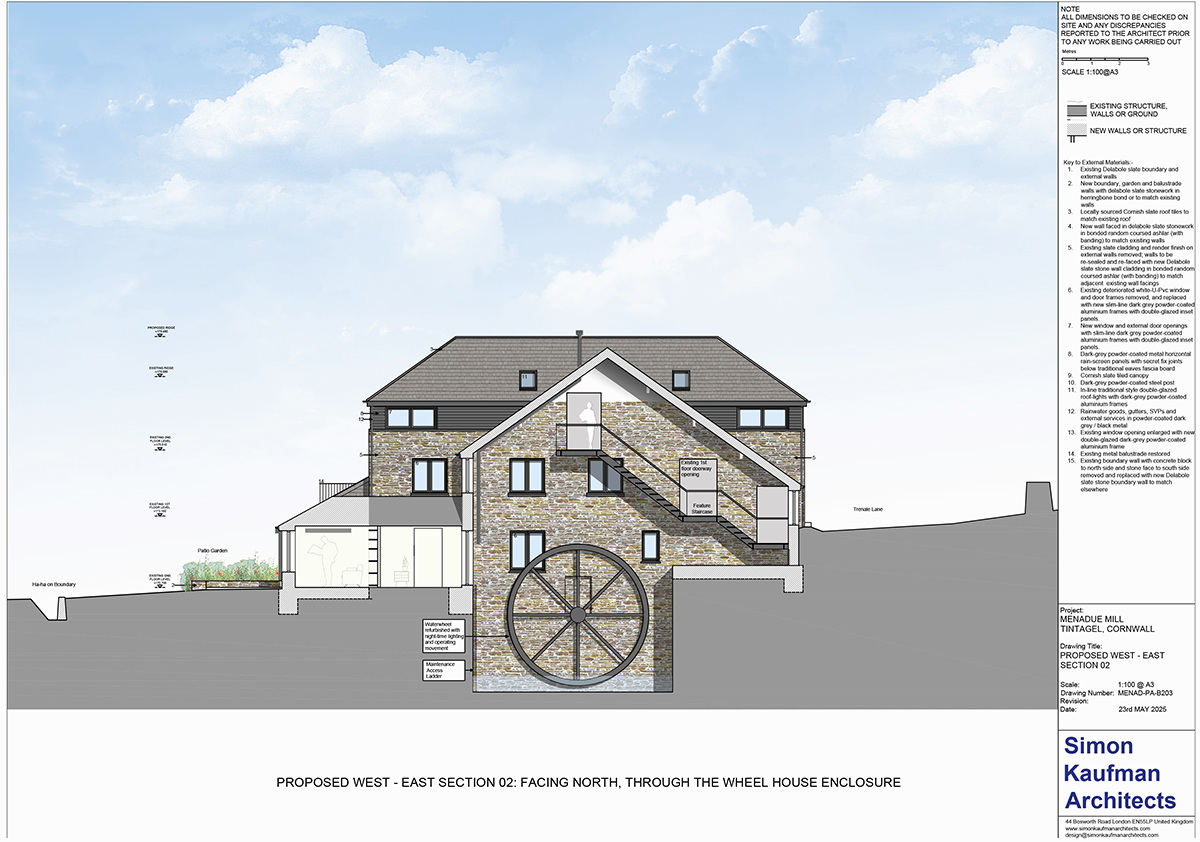
A low-profile single-storey extension is set into the northern slope, largely concealed from Trenale Lane and formed in local Delabole stone with restrained contemporary detailing. Green roofs, permeable surfaces and careful cut-and-fill strategies minimise visual impact and respond directly to the site's topography.
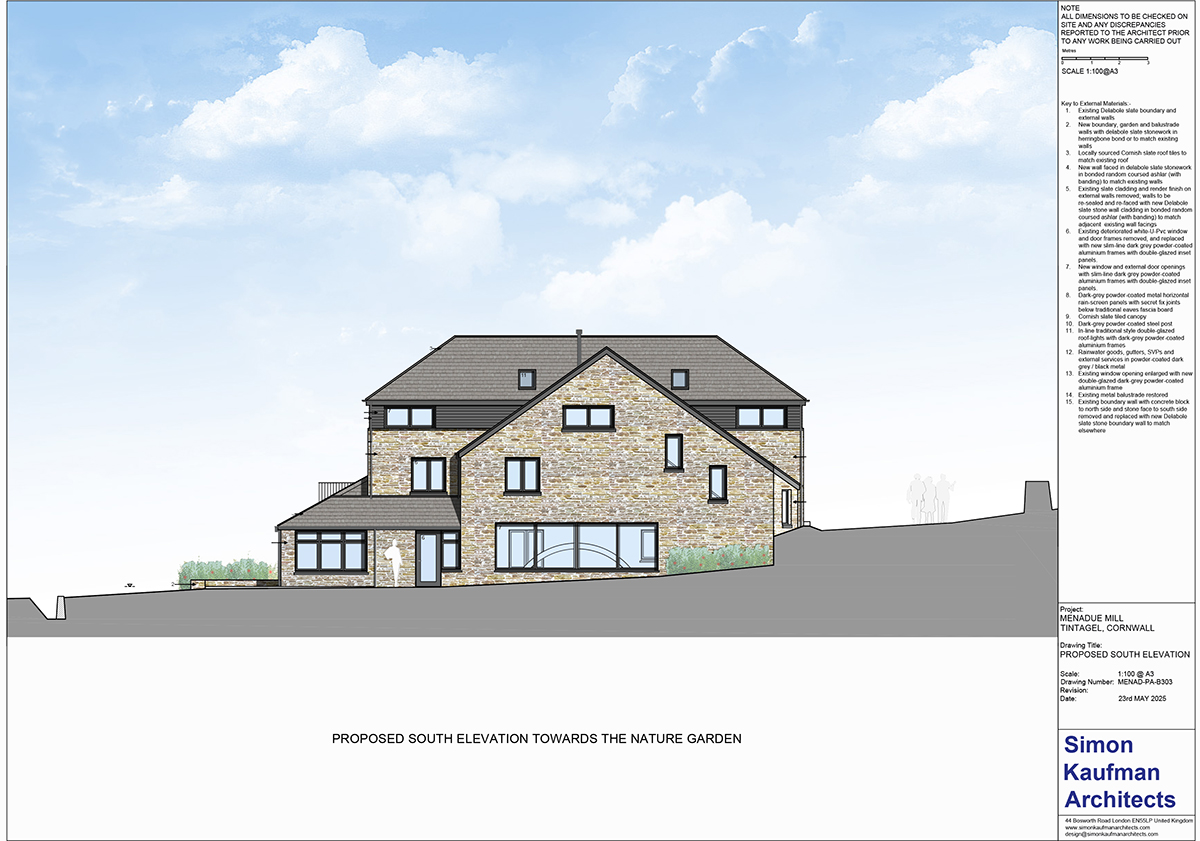
To the south, previously degraded hardstanding is replaced with a landscaped garden and ecological enhancement area. Working alongside ecologists, the proposals reinstate natural drainage patterns, introduce species-rich planting, and strengthen existing stone boundaries. The approach reflects best practice in sustainable design and development within an Area of Outstanding Natural Beauty.
The Waterwheel as a Central Feature
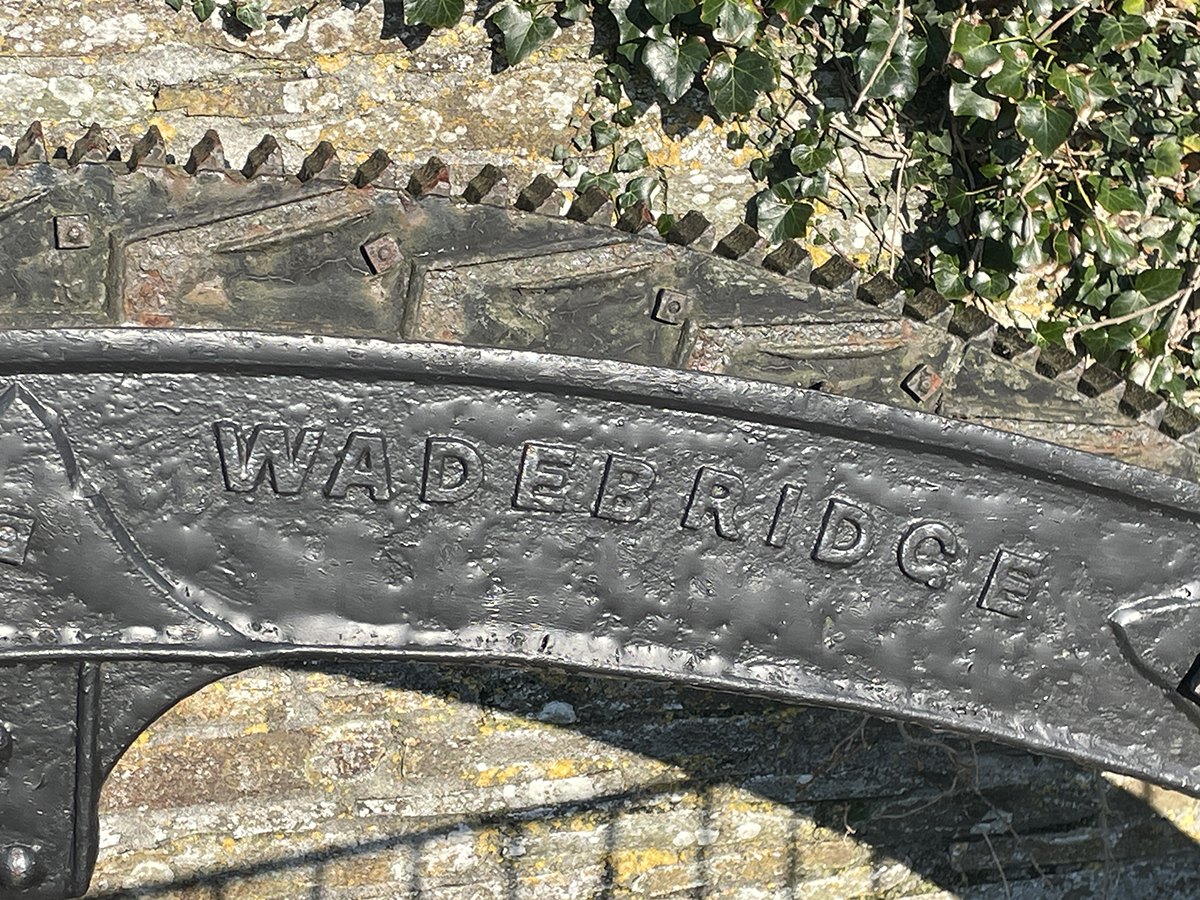
The historic waterwheel remains a defining element of the project. The design retains it in situ, enclosing it within a glazed wheelhouse that makes it legible from both inside the building and on approach from the lane. The wheel is preserved as a key heritage asset and a focal point within the internal arrangement, reinforcing the building's industrial origins.
Access, Layout and Modern Living
Access and arrival have been comprehensively rethought to resolve long-standing safety and accessibility issues. A new north-side driveway and garaging provide safe vehicle movement and step-free access, while rationalising the internal circulation and entrance sequence.
Internally, the mill is reconfigured to support contemporary family living while respecting the historic fabric. New kitchen, dining, wellness and living spaces are combined with improved daylighting, energy performance, and spatial clarity. Upper floors are rationalised to improve bedroom layouts and long-term flexibility without altering the essential form or silhouette of the building.
Current Status
The project is now progressing through detailed technical design, with construction drawings in development. Subject to final approvals and procurement, works are anticipated to commence on site in 2026.
This scheme exemplifies a complex luxury home refurbishment within a highly sensitive planning context, balancing heritage conservation, ecological responsibility, and contemporary residential design to secure the long-term future of an exceptional historic building.



Expert guidance for historic building refurbishments and rural luxury homes
We help developers and landowners navigate planning, heritage constraints, and technical design to deliver high-quality, sensitive, and commercially viable projects in protected or sensitive landscapes.
Phone: 07966 468 348
Email: design@simonkaufmanarchitects.com
